
Technical SEO — Without This, Nothing Else Performs
200+
Websites Built
2020
Established In Cumbria
24/7
Customer Support
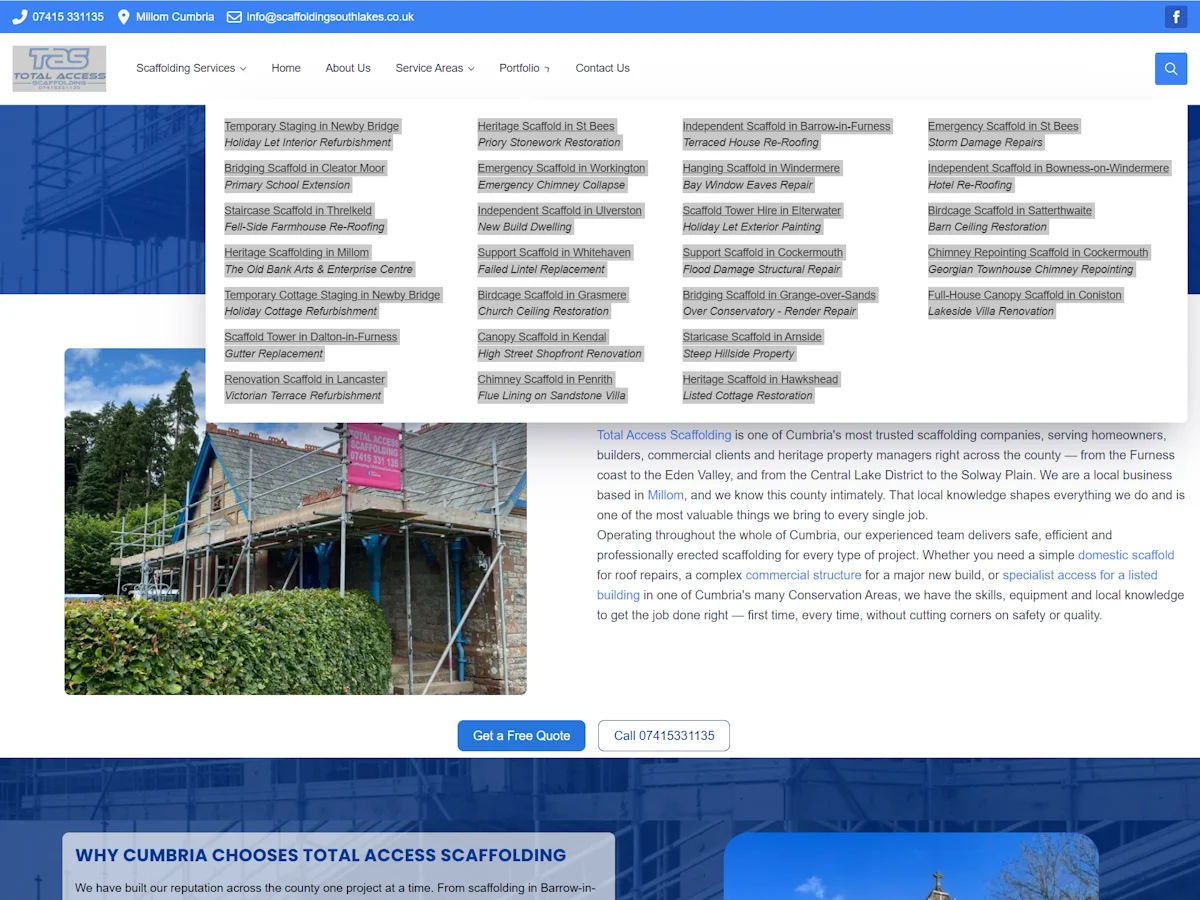
Technical SEO — Key Terms Explained
Technical SEO covers a broad range of specific disciplines. Here is what each one means and why it matters to your search performance.
Why Choose Whamos for Technical SEO
Technical SEO — The Foundation That Enables Everything Else
Technical SEO is not glamorous. It does not produce the visible wins that a new content page or a well-placed link does. But without it, every other SEO investment underperforms — because Google cannot properly assess a technically broken site regardless of how good the content is.
Page speed and Core Web Vitals are Google's measurable performance standards. Largest Contentful Paint measures how quickly the main content appears. Interaction to Next Paint measures how quickly the page responds to the first user interaction. Cumulative Layout Shift measures how stable the layout is as it loads. Sites that fail these thresholds rank lower than sites that pass them, all else being equal. We engineer every site to pass from the architecture stage — not as a retrofit when rankings disappoint.
Crawlability determines whether Google can access and index your pages at all. Incorrect robots.txt, broken internal links, orphaned pages with no links pointing to them, and duplicate content without canonical tags all prevent Google from properly understanding your site. We audit every one of these and fix what we find.
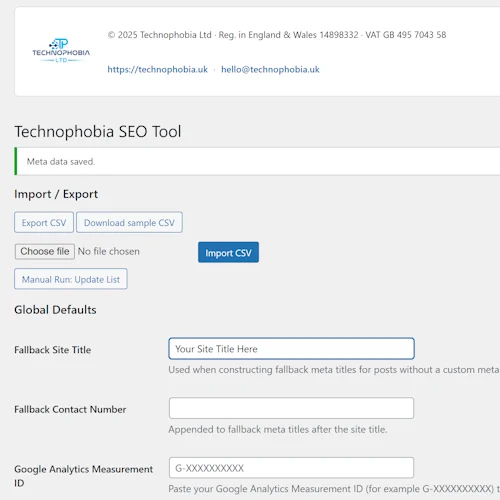
Schema markup is the structured data that tells Google explicitly what your business is, what it does, and how your content is structured. Our Technophobia SEO plugin handles this automatically on every page — correctly and without conflicts. When a page earns a link or ranks for a new search, the schema is already correct. No manual updates required as your site grows.
Technical SEO is the prerequisite. The content strategy and link building that builds broader authority — covered on our SEO Services page — and the local search work that gets you into the Map Pack — covered on our Local SEO page — both depend on these foundations being correct first.

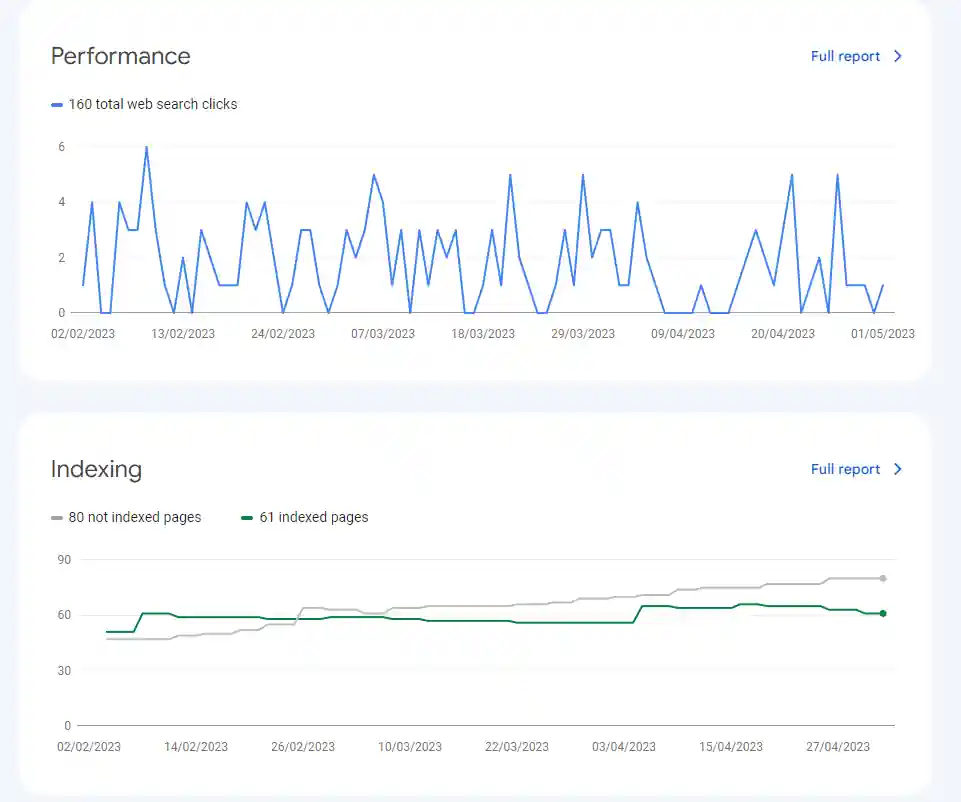
What a Technical SEO Audit Covers
- Page speed — WebP images, minified assets, server-level caching, TTFB optimised, real-user performance tested on real devices.
- Core Web Vitals — LCP, INP, and CLS all engineered to pass Google's thresholds from the architecture stage.
- Schema markup — LocalBusiness, Service, FAQPage, AggregateRating via our Technophobia SEO plugin. No conflicts, no duplicates, auto-updating.
- Meta tags — keyword-researched title tags and meta descriptions unique to every page. No generic defaults, no missing tags.
- Heading structure — correct H1/H2/H3 hierarchy on every page. No duplicates, no skipped levels, no headings used purely for styling.
- Mobile performance — tested on real mobile devices and real connections, not desktop simulations.
- Crawlability — XML sitemap submitted, robots.txt correctly configured, canonical tags on duplicate content, internal link architecture planned.
- WCAG 2.2 AA accessibility — audited with our in-house tool. Every barrier identified and fixed, not just reported.
- SSL and security — enforced HTTPS, rate-limited logins, daily offsite backups, WordPress hardened.
- No broken links, orphaned pages, duplicate content, or pages indexed that should not be.
WCAG 2.2 AA Accessibility — Our In-House Assessment Tool

Web accessibility means your website can be used by everyone — including people with visual, auditory, motor, or cognitive impairments. WCAG 2.2 AA is the current standard: required by law for public sector bodies, increasingly expected by all users, and a growing signal in Google's quality assessment.
We believe the web should be accessible to everyone, regardless of ability. This is not a compliance exercise for us — it is something we care about. That is why we built our own assessment tool rather than relying on automated checkers that miss the majority of real barriers.
Why generic tools are not enough: Automated accessibility checkers typically identify around 30% of WCAG 2.2 AA issues. The remainder require structured human assessment against each criterion. Our tool combines automated checking with human review, producing a report that identifies every barrier and maps each one to the specific fix required.
What we assess: Colour contrast across all text and interactive elements. Keyboard navigation — can every function be operated without a mouse? Focus indicators — is the currently focused element visually clear? Alt text on all images. Form labels correctly associated. Heading structure logical when read linearly. ARIA labels on interactive elements. Error handling that helps users correct mistakes. Readable without CSS. Correct language attributes.
We deliver the report and implement every fix. Accessibility work is included in every site we build and available as a standalone service for existing sites. For public sector bodies where WCAG 2.2 AA is a legal requirement, we have specific experience and can document the remediation process for your records.
Why Whamos Technical SEO Is Different
Technical SEO — Frequently Asked Questions
Technical SEO ensures your website is correctly structured so Google can find, crawl, understand, and rank it properly. It covers page speed, Core Web Vitals, schema markup, crawlability, meta tags, mobile performance, and accessibility. Without correct technical foundations, content and links underperform — because Google cannot properly assess a technically broken site regardless of how good everything else is. We include it as standard in every site we build.
Core Web Vitals are Google's measurable performance standards: Largest Contentful Paint (how quickly the main content appears), Interaction to Next Paint (how quickly the page responds to interaction), and Cumulative Layout Shift (how stable the layout is as it loads). Google uses these as a ranking signal — sites that pass the thresholds rank better than sites that fail them. We engineer every site to pass from the architecture stage, not as a retrofit after rankings disappoint.
Our in-house accessibility assessment tool combines automated checking with structured human review — because automated tools alone catch only about 30% of real accessibility barriers. We assess colour contrast, keyboard navigation, focus indicators, alt text, form labels, heading structure, ARIA labels, error handling, and more. We then fix every barrier we find, not just report them. For public sector bodies where WCAG 2.2 AA compliance is a legal requirement, we can document the full remediation process for your records.
Yes. We audit existing sites against the same technical criteria we apply to our own builds, prioritise issues by their impact on search performance, and implement the fixes. Some sites have fundamental problems that make a rebuild the more efficient option — but we will tell you that honestly after the audit, not before. We do not push unnecessary rebuilds. Targeted technical work often produces significant improvements without the cost and disruption of a full rebuild.
The initial audit and fix is the significant work — identifying every issue and implementing the corrections. After that, technical SEO becomes maintenance: monitoring for new issues, keeping schema markup and sitemaps current as the site grows, checking Core Web Vitals after updates, and reviewing accessibility as new content is added. For sites we manage on retainer, this maintenance is included. For sites where we have done a one-off audit, we offer scheduled re-audits to catch anything that has drifted.
Ready to Fix the Technical Foundations?
Specialist
Contact Us
Monday, Tuesday, Thursday, Friday
9 am - 4 pm
out of hours 07470412889
Cookie preferences
Choose which cookies you are happy for us to use. You can change your mind at any time from the Cookie settings button.
About functional cookies
Needed for the website to work and to keep it secure, for example remembering your cookie choices, keeping a basket or booking together and protecting forms from spam. These are always on.
About preferences cookies
Remember choices you make, such as how a list is displayed, so the site works the way you prefer.
About statistics cookies (1 service)
Help us understand how visitors use the website so we can improve it.
About marketing cookies (1 service)
Used by third-party services such as maps, videos and social media, which may track you across other websites.